








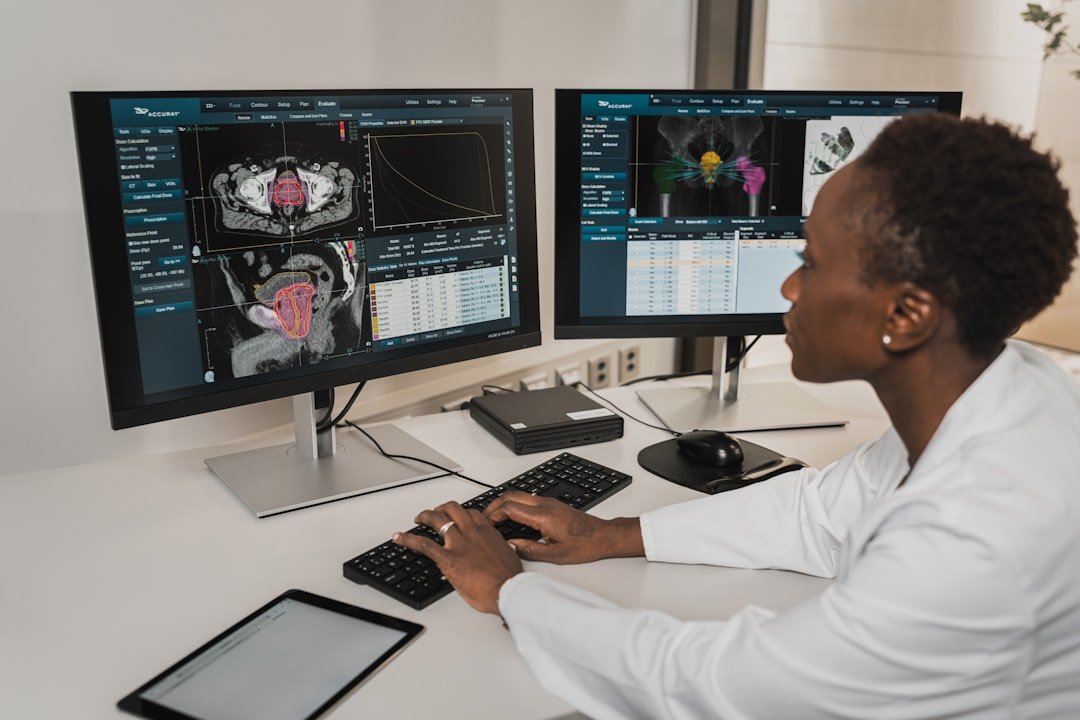
Artificial Intelligence (AI) has emerged as a transformative force across various sectors, and healthcare is no exception. Within the realm of medical imaging, AI technologies are revolutionizing the way radiologists interpret images, diagnose conditions, and manage patient care. The integration of AI into radiology is not merely a trend; it represents a paradigm shift that enhances the capabilities of healthcare professionals while also improving patient outcomes.
As the volume of imaging data continues to grow exponentially, the need for efficient and accurate analysis becomes increasingly critical. AI systems, particularly those utilizing machine learning and deep learning algorithms, are designed to assist radiologists by automating routine tasks, identifying patterns, and providing decision support. The application of AI in radiology encompasses a wide range of functionalities, from image acquisition to interpretation and reporting.
By leveraging vast datasets and advanced algorithms, AI can assist in detecting anomalies that may be subtle or easily overlooked by human eyes. This capability not only enhances diagnostic accuracy but also allows radiologists to focus on more complex cases that require human expertise. As we delve deeper into the role of AI in medical imaging, it becomes evident that this technology is poised to redefine the landscape of radiology, making it more efficient, precise, and patient-centered.
Key Takeaways
- AI enhances accuracy and efficiency in medical imaging and radiology practices.
- Key applications include image analysis, diagnosis support, and workflow optimization.
- Challenges involve data privacy, algorithm bias, and integration complexities.
- Ethical considerations focus on patient consent, transparency, and accountability.
- Ongoing education and training are essential for effective AI adoption in radiology.
The Role of AI in Medical Imaging
AI plays a multifaceted role in medical imaging, primarily through its ability to analyze large volumes of data quickly and accurately. One of the most significant contributions of AI is its capacity for image recognition and classification. Algorithms trained on extensive datasets can identify various pathologies in imaging studies such as X-rays, CT scans, and MRIs with remarkable precision.
For instance, convolutional neural networks (CNNs) have been particularly effective in detecting conditions like pneumonia in chest X-rays or identifying tumors in mammograms. These algorithms learn from labeled datasets, improving their accuracy over time as they are exposed to more examples. Moreover, AI systems can assist in workflow optimization within radiology departments.
By automating routine tasks such as image segmentation and annotation, AI reduces the time radiologists spend on these processes, allowing them to allocate more time to complex cases that require nuanced interpretation. Additionally, AI can prioritize cases based on urgency, ensuring that critical findings are flagged for immediate attention. This triaging capability is especially valuable in busy clinical settings where timely diagnosis can significantly impact patient outcomes.
The integration of AI into medical imaging not only enhances diagnostic capabilities but also streamlines workflows, ultimately leading to improved efficiency in radiology practices.
Advantages of AI in Radiology
The advantages of incorporating AI into radiology are manifold and extend beyond mere efficiency gains. One of the most compelling benefits is the potential for improved diagnostic accuracy. Studies have shown that AI algorithms can match or even surpass human radiologists in certain tasks.
For example, a study published in the journal Nature demonstrated that an AI system could detect breast cancer in mammograms with a sensitivity rate comparable to that of expert radiologists while also reducing false positives. This level of accuracy can lead to earlier detection of diseases, which is crucial for effective treatment and better patient prognoses. Another significant advantage is the reduction of burnout among radiologists.
The increasing volume of imaging studies has led to overwhelming workloads for many professionals in the field. By automating repetitive tasks and providing decision support, AI can alleviate some of this burden, allowing radiologists to focus on more complex interpretations and patient interactions. This not only enhances job satisfaction but also contributes to better mental health among practitioners.
Furthermore, as AI continues to evolve, it has the potential to serve as a valuable educational tool for radiology trainees, providing them with instant feedback and insights that can enhance their learning experience.
Challenges and Limitations of AI in Radiology
Despite its numerous advantages, the integration of AI into radiology is not without challenges and limitations. One major concern is the issue of data quality and representativeness. AI algorithms rely heavily on the datasets used for training; if these datasets are biased or lack diversity, the resulting models may not perform well across different populations or clinical scenarios.
For instance, an algorithm trained predominantly on images from one demographic group may struggle to accurately identify conditions in patients from other backgrounds. This limitation underscores the importance of using diverse datasets that reflect the variability found in real-world clinical practice. Another challenge lies in the interpretability of AI algorithms.
Many advanced AI systems operate as “black boxes,” meaning their decision-making processes are not easily understood by humans. This lack of transparency can be problematic in a clinical setting where radiologists must justify their interpretations and recommendations to patients and other healthcare providers. The inability to explain how an AI system arrived at a particular conclusion can lead to mistrust among practitioners and patients alike.
Addressing these challenges requires ongoing research into developing interpretable models and establishing guidelines for ethical AI use in clinical practice.
AI Applications in Medical Imaging
AI applications in medical imaging are diverse and continue to expand as technology advances. One prominent application is in the realm of image analysis for disease detection and diagnosis. For example, AI algorithms have been developed to detect diabetic retinopathy in retinal images with high accuracy, enabling early intervention that can prevent vision loss.
Similarly, AI tools are being utilized to identify lung nodules in CT scans, assisting radiologists in diagnosing lung cancer at earlier stages. Beyond diagnostic applications, AI is also being employed for predictive analytics in medical imaging. By analyzing historical imaging data alongside patient outcomes, AI systems can identify risk factors associated with various conditions.
For instance, predictive models can assess the likelihood of disease progression based on initial imaging findings, helping clinicians make informed decisions about treatment plans and follow-up care. Additionally, AI is being integrated into radiomics—the extraction of quantitative features from medical images—to provide deeper insights into tumor characteristics and behavior, further enhancing personalized treatment approaches.
Impact of AI on Radiology Practices
The impact of AI on radiology practices is profound and multifaceted. One significant change is the shift towards a more collaborative approach to patient care. With AI handling routine tasks and providing decision support, radiologists can engage more meaningfully with referring physicians and other members of the healthcare team.
This collaboration fosters a more integrated approach to patient management, where imaging findings are discussed in the context of overall patient health rather than in isolation. Moreover, the introduction of AI tools has prompted a reevaluation of traditional workflows within radiology departments. As these technologies become more prevalent, there is a growing emphasis on interdisciplinary collaboration between data scientists and radiologists to develop tailored solutions that address specific clinical needs.
This collaboration not only enhances the development of effective AI tools but also ensures that they align with the practical realities faced by radiologists in their daily work.
Ethical Considerations in AI and Radiology
The integration of AI into radiology raises several ethical considerations that must be addressed to ensure responsible use of technology. One primary concern is patient privacy and data security. The training of AI algorithms often requires access to large datasets containing sensitive patient information.
Ensuring that this data is handled securely and ethically is paramount to maintaining patient trust and complying with regulations such as HIPAA (Health Insurance Portability and Accountability Act) in the United States. Additionally, there are ethical implications related to accountability when AI systems are involved in clinical decision-making. If an AI algorithm makes an erroneous diagnosis or recommendation, determining liability becomes complex.
Should responsibility lie with the developers of the algorithm, the healthcare institution using it, or the radiologist interpreting the results? Establishing clear guidelines for accountability is essential as AI becomes more integrated into clinical practice.
Future Trends in AI and Radiology
As technology continues to evolve, several trends are emerging that will shape the future landscape of AI in radiology. One notable trend is the increasing use of federated learning—a decentralized approach where algorithms learn from data across multiple institutions without sharing sensitive information directly. This method allows for more robust model training while preserving patient privacy and addressing concerns related to data security.
Another trend is the growing emphasis on personalized medicine facilitated by AI technologies. As algorithms become more sophisticated at analyzing individual patient data alongside imaging findings, there will be greater potential for tailoring treatment plans based on specific patient characteristics and disease profiles. This shift towards personalized care aligns with broader trends in healthcare aimed at improving outcomes through targeted interventions.
Integration of AI with Radiology Workflow
The successful integration of AI into radiology workflows requires careful consideration of existing processes and systems within healthcare institutions. Effective implementation involves not only deploying advanced algorithms but also ensuring that they seamlessly fit into daily operations without disrupting established practices. This may involve reengineering workflows to accommodate new technologies while maintaining high standards of patient care.
Training staff on how to effectively utilize AI tools is also crucial for successful integration. Radiologists must be equipped with the knowledge and skills necessary to interpret AI-generated insights critically while understanding their limitations. Ongoing education programs that focus on both technical proficiency and clinical application will be essential as AI continues to evolve within the field.
Training and Education for AI in Radiology
As AI becomes increasingly integrated into radiology practice, there is a pressing need for comprehensive training and education programs tailored specifically for radiologists and other healthcare professionals involved in medical imaging. Traditional medical education often lacks a focus on data science and machine learning principles; therefore, incorporating these topics into curricula will be vital for preparing future practitioners. Continuing education initiatives should also emphasize interdisciplinary collaboration between radiologists and data scientists or engineers who specialize in developing AI technologies.
By fostering partnerships between these groups, healthcare institutions can ensure that new tools are designed with clinical relevance in mind while also equipping radiologists with the skills needed to leverage these innovations effectively.
The Future of AI in Radiology
The future of AI in radiology holds immense promise as technology continues to advance at an unprecedented pace. With ongoing research focused on improving algorithm accuracy, enhancing interpretability, and addressing ethical considerations, we can expect significant strides toward integrating AI seamlessly into clinical practice. As these developments unfold, it will be essential for healthcare professionals to remain engaged with emerging technologies while advocating for responsible use that prioritizes patient safety and care quality.
In this evolving landscape, collaboration between technologists and clinicians will be paramount to harnessing the full potential of AI in radiology. By embracing innovation while remaining vigilant about ethical implications and practical challenges, we can pave the way for a future where AI enhances diagnostic capabilities, streamlines workflows, and ultimately improves patient outcomes across diverse healthcare settings.